
Why “?” Beats “!”
What NASA, Incentives, and a Question Mark Have in Common. Each reveals how human behavior shapes strategy execution more than plans ever do.

Welcome to the first edition of The Strategy Trap Newsletter—formerly Mistere Musings. The new name ties what we explore here more directly to my upcoming book and its focus on the real-world art of strategy execution.
This week’s mix is all about the people side of execution — how small signals shape big outcomes.
From the humble question mark that builds accountability, to the “glue players” who hold teams together, to NASA’s laughter test for emotional intelligence, it’s a good reminder that how we interact often matters more than what we intend.
Cheers,
Kevin
FEATURED MUSING
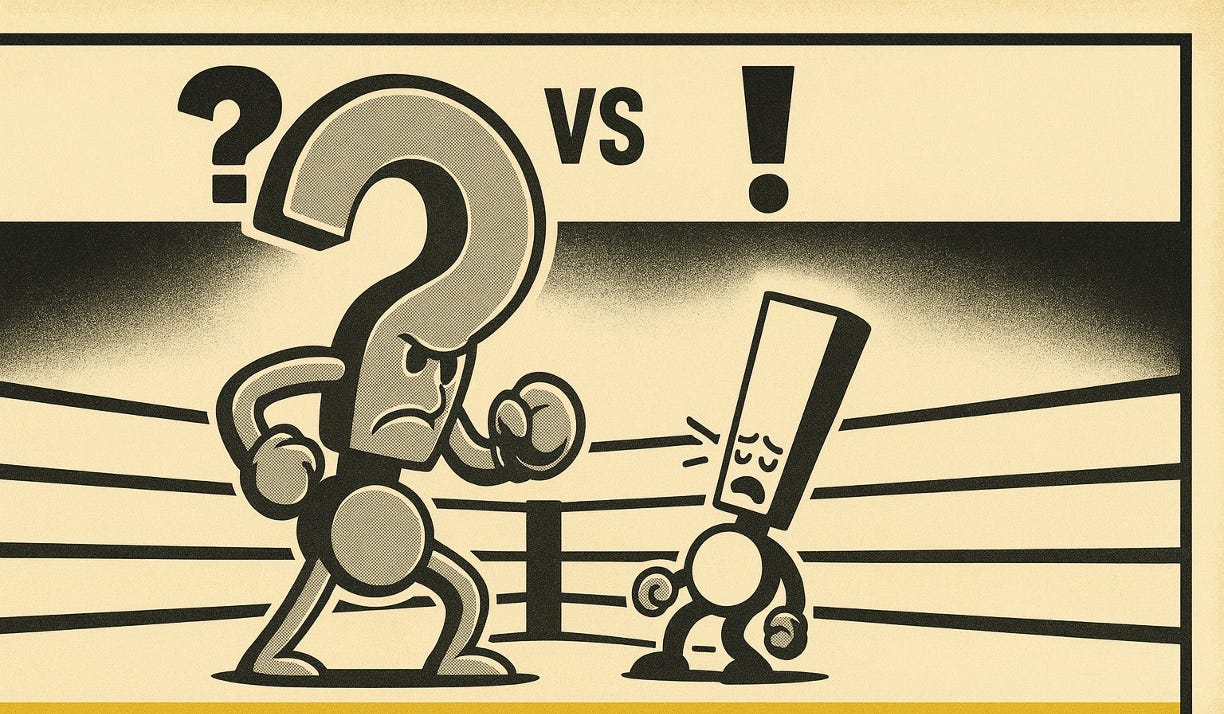
An emphatic statement tells.
A question invites.
And that small mark of punctuation often determines whether teams react or reflect.
Statements drive activity.
Questions drive accountability.
The Science Behind the Question Mark
1. The Mere-Measurement Effect
Simply asking people about their intentions increases the odds they’ll follow through.
When you say, “Be ready for Friday’s checkpoint,” you’ve set a task.
When you ask, “How are we looking for delivery at Friday’s checkpoint?” you invite reflection and ownership.
That simple shift makes the team visualize progress and self-assess. Once people picture success, their brains work to stay consistent with it. It’s a quiet but powerful commitment loop.
2. Reactance: Why Commands Backfire
Behavioral scientists call it psychological reactance—the instinct to resist when we feel controlled.
“Fix this.” triggers it.
“What’s getting in the way of fixing this?” disarms it.
Questions preserve autonomy, which keeps energy high and brings hidden barriers to the surface.
3. Questions Build Connection
Harvard research shows people who ask more questions—especially follow-ups—are liked and trusted more.
In execution work, that trust is leverage.
Questions signal curiosity and respect; statements signal finality.
If you want truth instead of politeness, start with a question.
4. Questions Spark Cognitive Work
A question is a neural interrupt. It flips the brain from passive reception to active search.
A statement—“We need tighter coordination.”—invites agreement or defense.
A question—“Where is coordination breaking down?”—opens a loop the brain wants to close.
That’s where insight turns into action.
Coaching Execution with Questions
Coaching effectively isn’t giving answers and instruction. It’s creating space for others to think better.
Questions push teams to reflect, clarify, and own the next move. They transform accountability from something enforced to something chosen.
Use statements to set direction.
Use questions to build capability.
Because execution improves most when people are thinking for themselves.
Next time you’re about to make a statement, pause and ask: What question would create more ownership right now?
TEAM DYNAMICS
Every Great Team Has One (or Needs One)
This article is a great reminder that execution starts with who’s on the team. Behavioral scientist Jon Levy highlights what he calls “glue players” as the people who hold teams together through connection, empathy, and steady follow-through. They’re rarely the loudest, but they’re often the ones who make collaboration possible. I especially like how he gives practical ways to spot them: ask who quietly makes things run smoother, who bridges silos, and who gives credit instead of chasing it. Team success often hinges less on raw talent than on having enough glue to keep the whole system working.
ORGANIZATIONAL BEHAVIOR
Incentives Always Win
This short note from George Mack packs a lot into a few words: incentives make the world go ’round. It’s a quick reminder that every system produces exactly the behavior it rewards—intentionally or not. I like these concise hits that land with force, because they spark reflection instead of explanation. What incentives—explicit, hidden, or accidental—are shaping how people operate in your organization right now? Understanding that often explains more than any strategy deck ever could.
QUOTE OF THE WEEK
“The system you have today is perfectly designed to deliver the results you’re getting.”
— W. Edwards Deming
INTERESTING
Who You’d Want in a Spaceship—Or a Strategy Room
Turns out NASA doesn’t just test for technical brilliance—they test for how people laugh together. This article breaks down how the agency uses laughter to gauge emotional intelligence when assembling astronaut crews. They’re doing it under the most intense conditions imaginable, but the takeaway travels well: team chemistry matters as much in orbit as it does in any organization. The finding’s a good reminder that success often depends less on raw talent than on how people respond to each other when things get tough—or even when they just get bored.
😀 AND NOW… YOUR MOMENT OF HAPPINESS 😀
Sound on for this one for an instant smile.
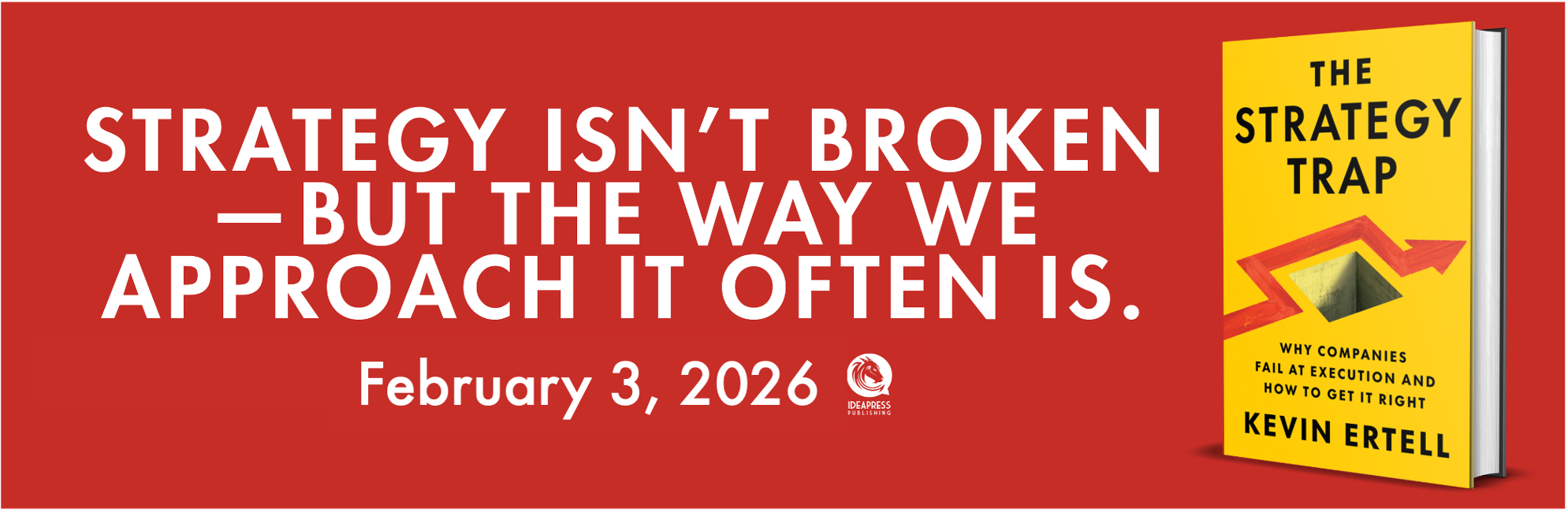
My book, The Strategy Trap: Why Companies Fail at Execution and How to Get It Right, comes out February 3, 2026.
If you’ve been enjoying these newsletters, I think you’ll enjoy the book. It expands on the same practical tools and real-world stories about turning strategy into results. Stay tuned for pre-order info.
Until then, this newsletter is your front-row seat to the ideas, frameworks, and stories behind it.
If you know a friend or colleague who wrestles with the gap between plan and execution, please forward this along!
💡NEED HELP EXECUTING YOUR STRATEGY?
We bring strategies to life with real-world know-how: We aim to drive your business’s growth using the lessons learned from years of direct operational experience. Our approach is grounded in practical strategies and knowledge, earned from the frontline of industry leadership and innovation, not just theoretical concepts. Let us show you how experience shapes success.
BOOK AN APPOINTMENT HERE