
The Case for Doing Nothing
On unstructured time, the beauty of enough, and real listening.

This week I’m doing nothing, and it’s glorious...and surprisingly productive.
Slowing down has a way of opening things up. Your thinking, your sense of what’s enough, and even your ability to hear the people around you. This week’s newsletter digs into all of that, plus a peek behind the curtain of every NBA broadcast you’ve ever watched.
Cheers,
Kevin
FEATURED MUSING
The Case for Doing Nothing
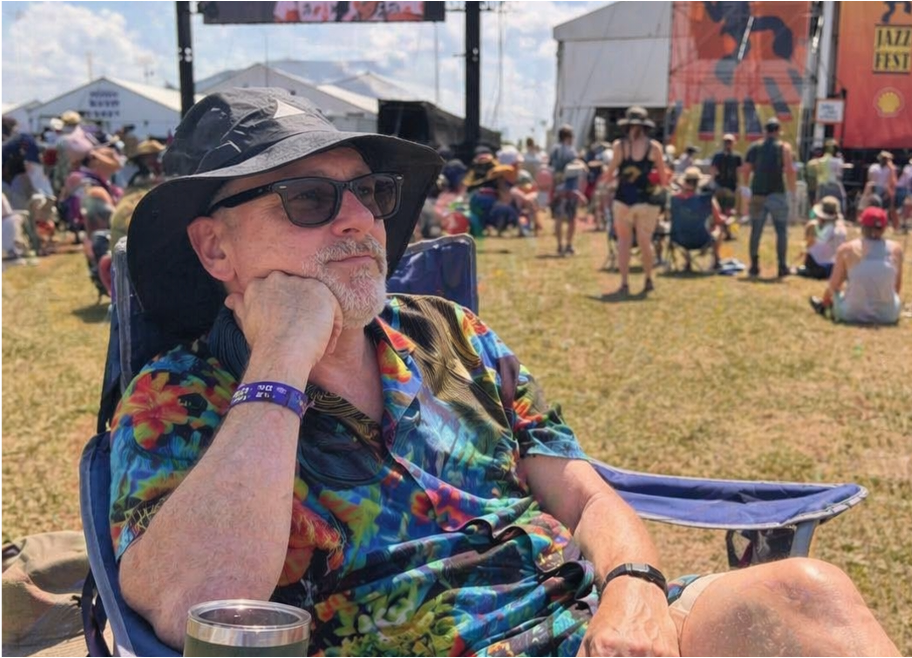
I’m writing this from New Orleans JazzFest. One of my favorite places on earth.
Yesterday, between sets, I just sat. No phone. No podcast. No plan. Just the hum of the crowd thinning out and the distant sound of someone’s soundcheck bleeding across the fairgrounds. And somewhere in that quiet, my brain did something it rarely gets to do anymore: it wandered.
Thoughts I hadn’t made time for started surfacing. Nothing particularly urgent—just loose, unfinished ideas I’d been carrying around without realizing it. It felt like the mental equivalent of a good stretch.
We don’t do this enough. Most of us (me certainly included) have filled every available gap with something—a podcast, TikTok, a playlist, a meeting we didn’t need to attend. We’ve made boredom nearly extinct, and I think we’re paying for it.
Dov Frohman, in Leadership the Hard Way, argued that leaders should keep up to 50 percent of their time unscheduled. He called it “slop time.” Not vacation. Not team offsites. Just open, unstructured time to think, reflect, and let the brain make connections it can’t make when it’s buried in the next task.
Kevin Kelly calls out the performance value of rest: “Regularly scheduled sabbaths, sabbaticals, vacations, breaks, aimless walks and time off are essential for top performance of any kind. The best work ethic requires a good rest ethic.”
He’s right. And we know he’s right. We just don’t act like it.
The irony is that the moments we’re most likely to skip—the walk without earbuds, the Saturday morning with no agenda, the twenty minutes sitting in a festival field between bands—are exactly the moments where some of the clearest thinking happens.
Your brain doesn’t need more input. We have soooo much input. It needs space to process the input it already has.
I’m not suggesting you book a trip to Jazz Fest (though I’d highly recommend it). I’m just saying let yourself be bored sometimes. Go on a walk and leave the phone at home. Sit in the backyard and stare at the trees. Give your brain a little room to breathe.
You might be surprised what it comes up with.
PERSONAL DEVELOPMENT
The Fisherman Already Won
Sitting in that festival field with nothing to do got me thinking about this thread from Sahil Bloom. When we fill every second with something, we lose the space to figure out what we actually want. And when that space disappears, other people’s definitions of success tend to fill it. Bloom’s parable of the fisherman and the banker makes the point beautifully—the fisherman already has the life the banker is sprinting toward. The whole piece is worth your time to get clear on your priorities before someone else decides for you.
LEADERSHIP
The Forensic Interviewer’s Guide to Real Listening
Slowing down creates space to think, but it also creates space to actually hear the people around you. This Fast Company piece features Michael Reddington, a forensic interviewer who spends his days extracting truth from high-stakes conversations. His biggest finding is that most of us aren’t really listening. We’re managing our biases, running an internal monologue, and confirming what we already believe. The fix is a mindset shift. Go into conversations focused on what you can learn, not what you want to say. Your internal monologue will always compete for airtime. The goal is to stop letting it win.
QUOTE OF THE WEEK
“Almost everything will work again if you unplug it for a few minutes, including you.”
— Anne Lamott
INTERESTING
Behind Every Swish, There’s a Guy with a Mic
This TikTok is a quick, fascinating peek behind the curtain of an NBA broadcast. A sound engineer walks you through exactly how he captures the swish of the net, the clank of the rim, the bounce of the ball, the chatter on the court. None of it happens by accident. Someone spends their entire working life getting those details exactly right, and most of us never give it a second thought. Here’s to all those hidden heroes behind the scenes taking things from good to great.
😀 AND NOW…YOUR MOMENT OF HAPPINESS 😀
Will we see this in an ESPN documentary in 20 years?
My Amazon #1 bestselling book, The Strategy Trap: Why Companies Fail at Execution and How to Get It Right, is now available!

If you’ve ever struggled to turn team agreement into consistent action, the book goes deep on how to fix that—with practical tools, real-world stories, and a framework for turning strategy into results. If you know someone who wrestles with the gap between plan and execution, please forward this along
Kevin, thanks for highlighting the value of rest — just as important in music as in work. We need to know when to play our part and when to pause and be quiet. Love that Anne Lamott quote too.
I could not agree more! I was raised by academics, and wish the concept of sabbatical was more widespread.