
Just Say No
Saying no, deciding anyway, and other things leaders avoid.

Saying no is easy in theory and brutal in practice.
Most of our hardest decisions aren’t even about right versus wrong. They’re about picking between two things that are both true, both important, and both going to cost something no matter which one you choose. This week’s Musings gets into why that’s so hard, what to do about it, and why noticing three new things about your living room might make you a slightly better leader.
Cheers,
Kevin
FEATURED MUSING
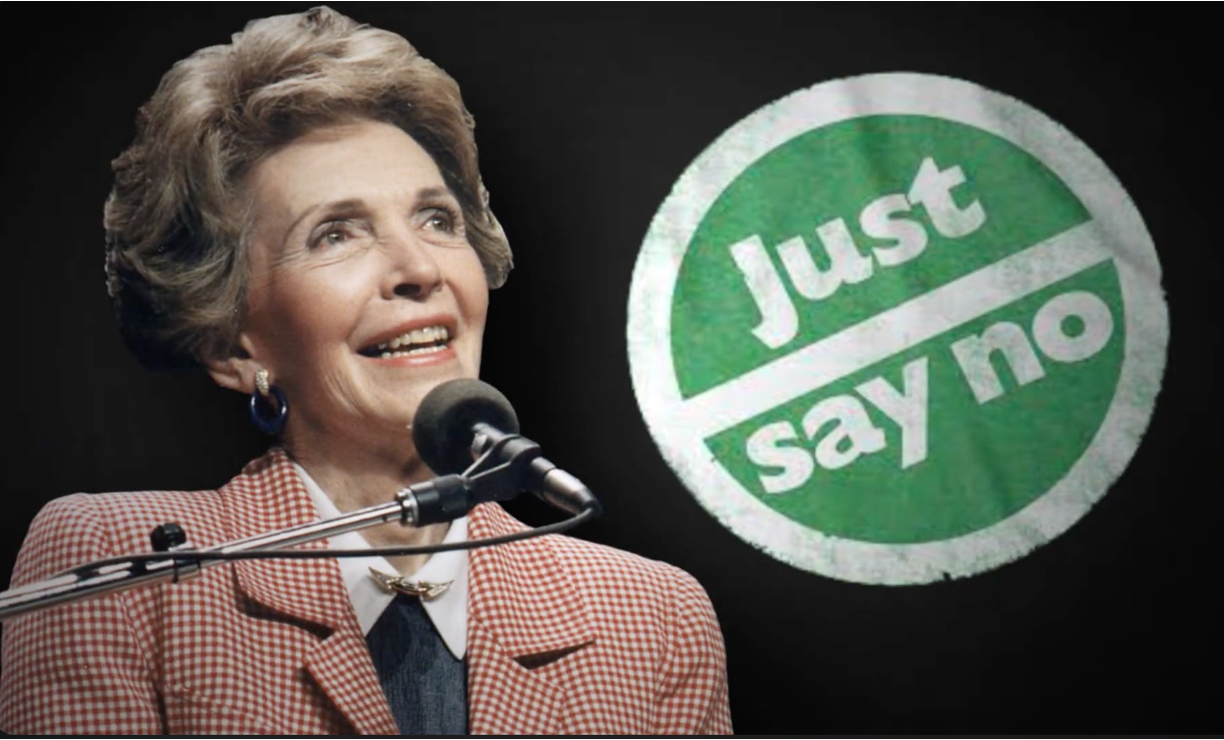
“Just say no.” - Nancy Reagan
I may be showing my age with that reference, so for those who don’t know, that advice came from the American First Lady in the ‘80s, aimed at getting kids to turn down drugs. It went over about as well as it does now when someone advises a corporate executive to abandon their pet project.
Coincidence? Who am I to say?
But I do get it. Saying no is hard. It feels like a loss, and we hate losing. There’s even a psychological term for it called loss aversion.
So we say yes, especially because in isolation, so many ideas sound great. But every yes steals time, budget, and attention from something else. You may not feel that trade right away. But you may feel it acutely months later when the thing you cared about most is still sitting there untouched because everything else ate first.
One way I’ve found to make it a little easier is to recognize that this doesn’t have to be a binary yes or no decision. You can really give yourself four options instead of two.
Yes. It fits what you said was strategically important. Do it. Full commitment.
Yes, if. It could work, but something has to change first. Maybe it’s less scope, a different timeline, or something else on your plate has to go to make room.
Not yet. The idea has real merit. It’s just not right for now. You’re not killing it. You’re parking it.
No. Clean and final. This protects your team’s time more than anything else you can say.
Successfully executing a strategy means making hard choices. It means picking one path and letting the other go, even if that other path already has money, time, or people attached to it. And it means saying no to things already sitting on your plate, not just the new requests coming in.
You have to be honest about the sunk costs of the budget you already spent, the year you already invested, and the passion you still feel for something you built. None of that is a reason to keep going if it’s not the best way to achieve your strategic intent. But it’s definitely part of the reason it’s hard to stop.
While it’s very hard to say no, something really does lift when you finally accept you’re not doing something and move on. The focus you gain going forward is incredibly valuable for you and your team.
LEADERSHIP
When Both Answers Are Correct
Saying No gets even harder when both options are strong. This article really got me thinking. The higher you get in an organization, the less your decisions come down to right or wrong. Most of them become a choice between two options that each have true advantages, and picking one always costs you something on the other side. I really like how William J. Maggio draws a distinction between puzzles and dilemmas. It’s a way of thinking about it that I hadn’t heard before. Puzzles have a correct answer waiting to be found. Dilemmas don’t, and pretending otherwise just delays the real decision. He also lays out four practical ways to work through decisions that don’t have a clean answer, and they’re well worth a read.
LEADERSHIP
Deciding Anyway
We’re living in a world of uncertainty, maybe more than ever, and leaders still have to make choices. This report from Russell Reynolds lays out ten lessons on how to do that well, and I like how it covers both the thinking behind the decision and how you talk about it afterward. Communication tops the list for a reason. Silence during uncertain times gets interpreted as bad news even when nothing’s actually wrong. The report also gets into balancing short-term moves with long-term commitments, and knowing when to abandon a strategy that’s stopped working instead of riding it out of habit.
QUOTE OF THE WEEK
“It is not the daily increase but daily decrease. Hack away at the inessentials.”
— Bruce Lee
INTERESTING
Certainty Is Overrated
Here’s a fun little exercise that Dr. Ellen Langer shared that really stuck with me. She says that every time you answer something with total certainty, you’re basically acting like a robot, because there’s very little in life we actually know for sure. I love her challenge at the end to notice three new things about a place you’ve lived for years, a friend you’ve known forever, or the room you’re sitting in right now. Do it once and you’ll realize how much you’ve stopped actually seeing. (See also my Tree Stump Theory.)
😀 And Now…Your Moment of Happiness 😀
I hope you’ll check out Amazon #1 bestselling book, The Strategy Trap: Why Companies Fail at Execution and How to Get It Right.

If you’ve ever struggled to turn team agreement into consistent action, the book goes deep on how to fix that—with practical tools, real-world stories, and a framework for turning strategy into results. If you know someone who wrestles with the gap between plan and execution, please forward this along.
Thanks for the mention, Kevin. Glad the puzzle and dilemma distinction was useful.
Your four options are the practical version of what I was circling. The one I'd watch is "not yet." It's the honest answer some of the time, and a polite no the rest. Parking something without a date to revisit it is how a portfolio fills up with work nobody has killed and nobody is doing.
The sunk cost point is the one that gets people. In my experience the money is the easy part to walk away from. What makes a no expensive is the credibility of having told a team this was a multi-year commitment. That isn't a reason to keep going, but it's worth saying out loud when you stop, because your team already knows it's the real reason the decision took 6 weeks instead of 6 days.
And one thing on the relief you describe at the end. It's real, and it's also the thing to be careful with. Feeling better about a decision isn't the same as having closed the gap it created. The P&L doesn't care that you finally exhaled.
I like the idea of not yet because leadership decisions aren’t always 0 or 1.
Sometimes you’re not saying no because the idea is bad. You’re saying no because now isn’t the right time. Parking something can be just as intentional as pursuing it.
I also think there’s a balance between curiosity and certainty. As a leader, you need curiosity as you explore and try to understand what you might be missing. But you can’t stay in that mode forever. At some point, you have to make the call: we’ve looked at this enough; this is the direction we’re taking, and I’m willing to own that decision.
Otherwise, we keep adding more layers in the name of being thoughtful, when what the team actually needs is clarity.